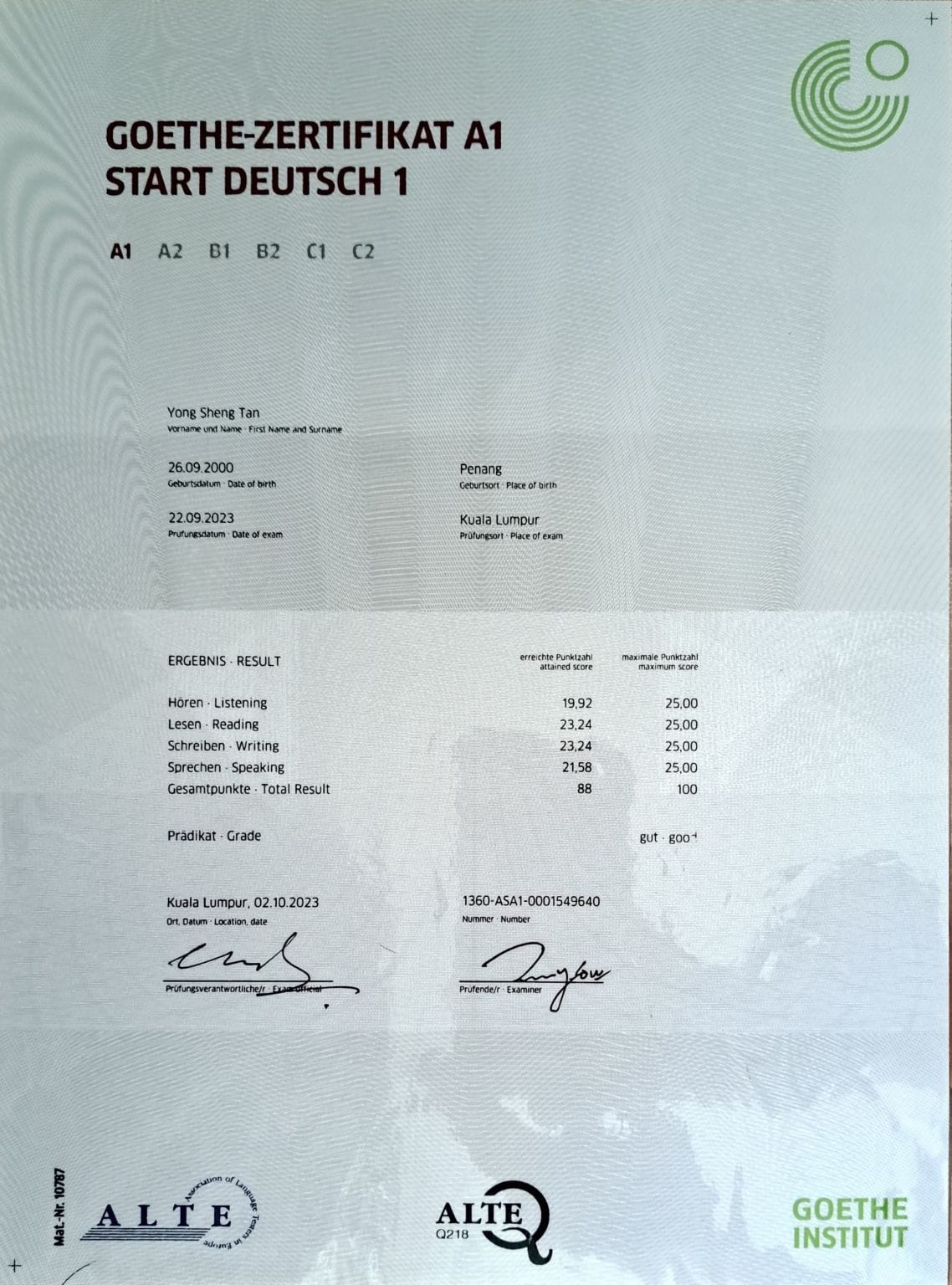
The B1 German Language Certificate: Your Gateway to Proficiency
The capability to communicate effectively in German can open many doors, both personally and expertly. The B1 German Language Certificate represents a vital milestone for students, suggesting an intermediate level of efficiency. Zertifikat B1 Kaufen out the significance of the B1 certificate, the abilities it includes, how to prepare for the exam, and responses to frequently asked concerns.
What is the B1 German Language Certificate?
The B1 German Language Certificate becomes part of the Common European Framework of Reference for Languages (CEFR), which categorizes language proficiency levels from A1 (newbie) to C2 (mastery). Achieving a B1 certificate signifies that an individual can understand and produce language in daily contexts.
Key Skills Assessed at B1 Level
When intending for the B1 German Language Certificate, prospects are anticipated to master numerous key abilities classified under the following areas:
| Skill Area | Description |
|---|---|
| Listening | Understand the bottom lines of clear standard speech on familiar matters. |
| Checking out | Comprehend texts dealing with daily or job-related subjects. |
| Speaking | Produce basic connected text on subjects that recognize or of individual interest. |
| Writing | Compose easy texts on subjects of personal interest and describe experiences and events. |
Value of the B1 Certificate
Achieving a B1 German Language Certificate is not just a testimony to one's language efficiency; it can be a significant asset in various situations.
- Educational Opportunities: Many universities and vocational institutions in German-speaking nations require at least a B1 level for admission to certain programs.
- Employment: A B1 certificate can improve employability, specifically in business needing interactions in the German language.
- Combination: For immigrants and expats, passing the B1 exam typically is essential for residency applications or to show integration into the German-speaking neighborhood.
Preparing for the B1 German Language Exam
Preparation for the B1 German exam can be approached in a methodical way to ensure all ability locations are covered. Here's a list of methods:
Study Strategies
- Register in a Language Course: Join a structured course at a language school or recreation center that concentrates on exam preparation.
- Self-Study Materials: Utilize books intended at the B1 level, practice exercises, and online resources.
- Language Exchange: Pair up with a German-speaking partner to practice conversational skills.
- Mock Exams: Attempt practice tests to familiarize yourself with the exam format.
- Multimedia Resources: Engage with German language podcasts, videos, and music to enhance listening skills and pronunciation.
Suggested Study Plan
| Week | Focus Area | Activity |
|---|---|---|
| 1 | Vocabulary | Produce flashcards for essential vocabulary. |
| 2 | Writing | Compose daily journal entries in German. |
| 3 | Listening | See German films with subtitles. |
| 4 | Checking out | Read easy German short articles and narratives. |
| 5 | Speaking | Take part in a conversation group. |
| 6 | Mock Tests | Complete practice exams under timed conditions. |
The Exam Format
The B1 German exam normally consists of 4 parts: Listening, Reading, Writing, and Speaking. Here is a breakdown of each component.
| Part | Duration | Description | Scoring |
|---|---|---|---|
| Listening | 30 mins | Understand dialogues and discussions. | Out of 25 points |
| Checking out | 60 minutes | Check out and comprehend texts, answer questions. | Out of 25 points |
| Composing | 60 mins | Compose a brief text based upon triggers. | Out of 25 points |
| Speaking | 15 minutes | Discussion with an examiner and a partner. | Out of 25 points |
Scoring
The maximum score for each part is 25 points, making an overall of 100 points. A candidate normally requires to score a minimum of 60 indicate pass the exam.
Regularly Asked Questions (FAQ)
What products should I utilize to get ready for the B1 exam?
Suggested materials consist of comprehensive B1 course books, online platforms that provide interactive exercises, and exam preparation guides concentrating on the CEFR requirements.
The length of time does it take to prepare for the B1 exam?
Preparation time differs by person, however many learners take 6 months to 1 year of dedicated research study to reach the B1 efficiency level.
What is the cost of the exam?
The cost of the B1 exam can vary based on place and testing organization but usually varies from EUR100 to EUR250.
Can I take the B1 exam online?
Numerous organizations provide online choices for the B1 exam, specifically because of the recent focus on digital education. B1-Zertifikat is vital to validate with the exam company.
What can I do after obtaining the B1 certificate?
Post-B1, learners may select to advance their research studies by going for the B2 level, which offers higher fluency and intricacy in the language. It could also be an opportunity to get entry into environments where German language usage is vital.
The B1 German Language Certificate acts as a crucial bridge in the journey towards language mastery. By methodically getting ready for the exam and using effective resources, learners can with confidence advance from basic interaction to advanced proficiency. With the ideal methods and commitment, the B1 certificate can be a considerable factor to academic, personal, and expert success in the German-speaking world.